NEW survey is out to improve the council website
Get an early look at the new website design and put it to the test!

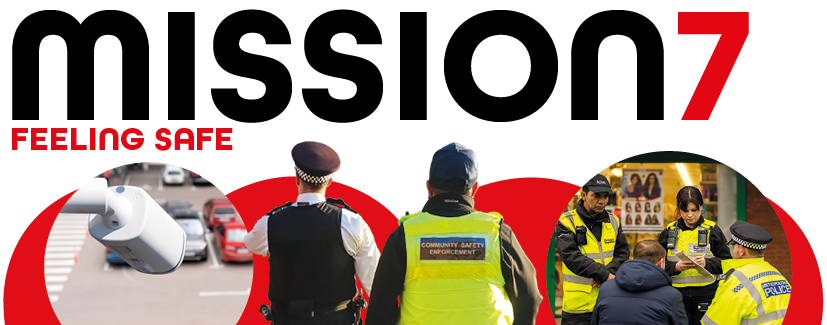
Feeling safe in your community is just as important as being safe. Statistically, looking at recent trends of crime data, the borough is safer than it has been over recent years and when compared to other London boroughs.
Yet we know people still feel unsafe in certain areas so we need to look at what drives perception of crime and how we can boost public confidence. We are aware that safety is relative and affected by a person’s vulnerability and perceived risk of being a victim of crime.
We need to do more to listen and act on the concerns of residents who can provide us with valuable intelligence about where in the borough they feel unsafe and why. Raising awareness about how to report such issues via the Safe Street application is key to gathering that intelligence, as is regular neighbourhood-level community engagement.
Reporting must lead to action if we are to build trust and confidence, so there is a challenge for us to show integrity and respond to the feedback and issues presented to us. Most public realm issues are fixable and when we improve and enhance parks and public spaces there are opportunities to address safety concerns through environmental solutions. New development schemes benefit from safety by design.
Sense of safety comes from visibility of the Police and Community Safety Enforcement Teams who patrol the borough more than residents realise. Though they cannot be everywhere all the time, it is very important the Police and Community Safety Teams are seen in key areas at key times as their presence allays fear. By adjusting patrol routes and schedules to cover areas of concern at peak times we will raise visibility and bring sense of security.
Again, this relies on good intelligence about where (geographically) those concern areas are, what’s happening in them, and at what times people feel unsafe, so we can act. Further installation of CCTV and deployable cameras across the borough, using intelligence to guide deployment, is another way to deter crime and anti-social behaviour and assist policing and enforcement. Generally, people feel safer if they know the area has surveillance.
Doing more to inform residents about the community safety and patrol activity in their neighbourhoods will help people be assured areas are being monitored and sharing positive information about true levels of crime and community safety initiatives boost confidence. ‘A cuppa with a copper’ and walk-and-talk sessions with the Police are powerful ways to engage with residents about community safety.
Increasing the number of safe spaces across the borough and promoting them will help residents to feel safe. Civic buildings, shops, cafés and restaurants, pharmacies and licenced premises can be havens for people who feel vulnerable, especially after dark. We will be doing more to train people in those safe spaces about needs of vulnerable groups, safeguarding and crime and safety issues so there are trusted spaces and people all over the borough.
Tackling hate crime is key to people from vulnerable and protected groups feeling safer which is why we will be working to drive up hate crime reporting, and to build confidence that reported hate crimes will have a robust response. We will be working with the LGBT+ community and people with learning disabilities on issues of safety and making sure their voices are heard in safety and policing matters.
We will also be strengthening monitoring of hate crime incidents and how we use local intelligence. This will feed into tension monitoring and broader work, particularly with faith communities, on social cohesion and community relations.
Together we can turn fear into confidence and make every street and place somewhere people feel confident in their safety. By tackling environmental neglect, listening to residents, and acting on intelligence, we create neighbourhoods that feel cared for and secure. Everyone has a key role to report issues and the build intelligence that is needed to address crime and safety concerns and issues. When reporting leads to real action, policing and enforcement are more visible, and there are safe spaces at times of need, trust and sense of safety grows.
| Measure | LBBD | London | England |
|---|---|---|---|
| Police recorded anti-social behaviour incidents per 1,000 population | 18.3% | 25.4% | 14.7% |
| Victim based crime per 1,000 population | 72.7% | 91.7% | 71.8% |
Please note: This is the latest available data as at 1st February 2026.
Community Safety Partnership