NEW survey is out to improve the council website
Get an early look at the new website design and put it to the test!
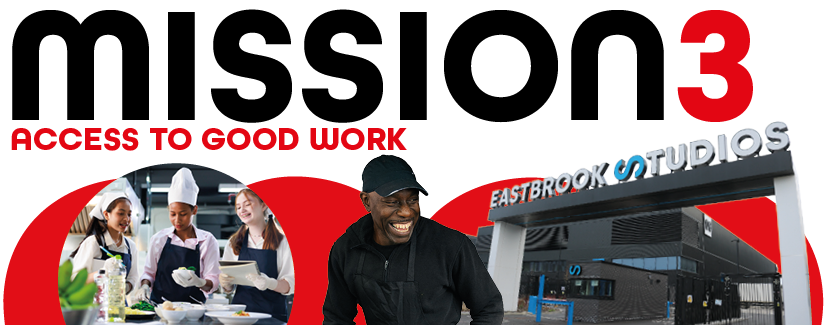
Through place-making we are regenerating the borough, attracting inward investment, and bringing new industry.
The growth of creative, green skills, construction, health and social care, and food and hospitality sectors will bring more jobs closer to home. It’s on us to create a bridge so those opportunities benefit local people, sparking and meeting their aspiration for good work. With a very young, dynamic, and high achieving population, there is a chance for those young people to build their futures here.
There is no shortage of talent, ambition and potential in our community, but some of that lies dormant, untapped, or stuck behind a barrier. We want to support people’s aspiration by helping them begin a journey or move to the next step of a journey they have already started. In some cases, this can be about upskilling or re-skilling someone to develop the hard skills needed to pursue a particular job or career path.
In other cases, we need to work more deeply with people to help them to aspire and believe in themselves. This type of support is often the catalyst for finding good work, recognising soft skills development as one of the critical barriers for those excluded from the labour market.
The approach to local employment support will become increasingly targeted in future years, partly driven by the focus of funding criteria, but also acknowledging people furthest from the labour market need the most support to re-enter it. Our focus is going to be on people – specifically three key cohorts of economically inactive residents and considering their intersectionality.
Firstly, residents with learning disabilities and autistic spectrum disorders who face systemic discrimination and barriers in every aspect of learning and employment. Secondly, women are another key cohort, specifically taking an intersectional approach to focus on BAME women and/or women in single parent households. Often work cannot fit or be flexible to meet the demands of caring responsibilities, and sometimes there are cultural expectations that put limitations on what women can aspire to. Thirdly, we must better support people with long term health conditions back into the labour market.
This is a left behind cohort who can get into a downward spiral where poor health prevents employment which further erodes health and wellbeing. A recent pilot with DWP working with people with long term conditions (LTCs) shows the right support can really change outcomes so we’ll be building on such innovations and approaches, including linking this work to our neighbourhood health developments which is supporting residents with LTCs also.
We can shape the local economy to deliver good work. There is a key role for anchor institutions and local employers of all types to embrace inclusion and diversity by adopting the London Living Wage, becoming Disability Confident, and being more progressive about family-friendly and flexible working. Local employers re-thinking how they advertise job vacancies and recruit can open a door previously closed or break down a barrier to accessing work.
We need much more engagement and outreach with local employers of all sizes and types, through our business support offer and broader relationships with local industry, so we reach a critical mass of good and inclusive work opportunities offered in the borough or in the sub-region.
A challenge for getting residents into work is helping them to navigate the system of employment and learning support which is more fragmented and complex than it should be. Providers and programmes are sometimes unaligned or in competition which makes it hard for people to plot a linear journey through a messy system.
These are unnecessary barriers to work we must fix by helping people understand the opportunities around them and the pathways to good work. By being more collaborative and co-ordinating the employment and learning offer around residents through our neighbourhood model, they will receive joined-up support. Importantly, we need to promote the local employment support offer and bring visibility to the opportunities for residents.
Employment is a critical determinant of health and important for a sense of identify and purpose. We want residents to aspire and thrive. We want to unlock their potential, raise their confidence and self-esteem. Unlocking the pathway to good work unlocks a pathway to prosperity.
| Measure | LBBD | London | England |
|---|---|---|---|
| Economic inactivity as a percentage of population aged 16 to 64 | 23.6% | 20.2% | 21.2% |
Please note: This is the latest available data as at 1st February 2026.
Inclusive Growth and Place Strategy
Thames Freeport Masterplan
Local London
Thames Freeport
Eastbrook Studios and MBS Hackman
Further Education and Higher Education Collaborative Framework